Hot And Cold Rubber lagging Conveyor Pulley About
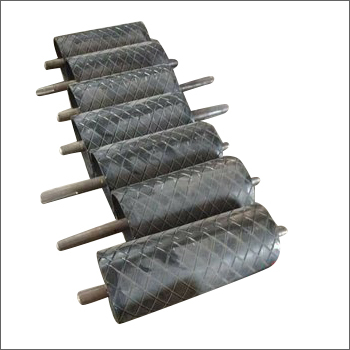
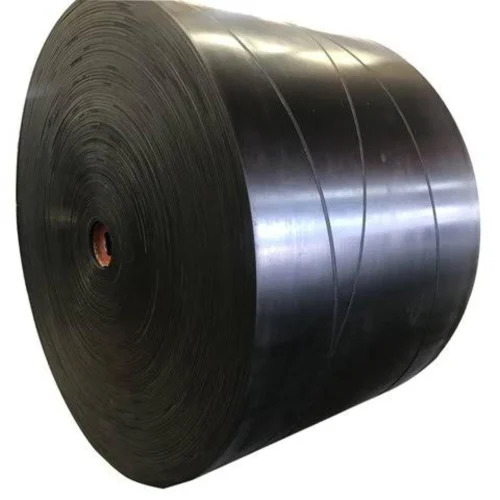
Hot And Cold Rubber Conveyor Pulley that we bring forth is utilized for transmitting the motion power to belt as well as for changing the direction of belt. Plus, it is used to form endless loop for constant operation. This type of conveyor pulley plays the most important role in the material handling system in diverse industries to convey raw material from one place to another. In addition to this, Hot And Cold Rubber Conveyor Pulley is durable, excellent in tensile strength, and can be acquired in different sizes at competitive prices.
Versatility for Demanding EnvironmentsDesigned for use in mining, cement, steel, power, and port applications, this pulley accommodates diverse operational requirements. It fits drive, tail, take-up, bend, and snub roles, efficiently handling heavy-duty material transportation with ease.
Custom-Built to Your SpecificationWith a wide range of diameters (150-1200 mm), thicknesses (8-12 mm), and lagging patterns (diamond, chevron, plain, or custom), each pulley is tailored for your operational needs. Choose between welded or cast shells and specify colors, branding, or rubber type per application.
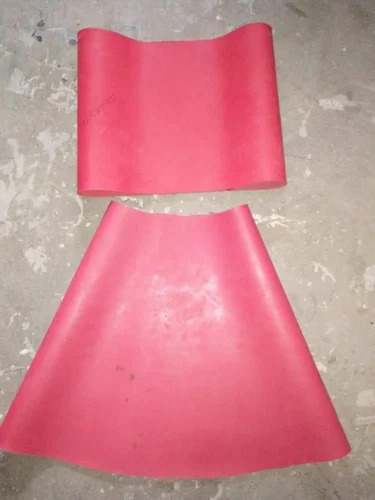
Superior Performance and LongevityThe rubber lagging provides anti-slip features, UV and abrasion resistance, excellent grip, and low water absorption, enhancing service life (up to 5 years or more) and ensuring efficiency in harsh environments. Maintenance is straightforward, ensuring reduced downtime.
FAQ's of Hot And Cold Rubber lagging Conveyor Pulley:
Q: What are the main benefits of using hot or cold rubber lagging on conveyor pulleys?
A: Hot vulcanized and cold bonding lagging increase the pulley's grip, reduce belt slippage, enhance wear resistance, and extend service life. Hot vulcanized lagging offers a stronger, seamless bond for high-stress environments, while cold bonding provides flexibility and easy installation for most standard applications.
Q: How is the pulley's balance ensured during manufacturing?
A: Static and dynamic balancing processes are utilized to eliminate vibration and ensure smooth operation. This precision attention to balance extends bearing life and optimizes conveyor performance, particularly under heavy-load conditions.
Q: When should I opt for chevron, diamond, or plain lagging patterns?
A: Chevron and diamond groove patterns are generally recommended for drive pulleys where greater grip and water dispersion are needed, while plain lagging is often used on non-drive pulleys or where minimal belt wear is desired. Custom grooves can be designed to address specialized requirements.
Q: Where can these rubber lagged pulleys be installed?
A: These pulleys are suitable for installation in diverse industrial conveyor systems, including mining, cement plants, steel production facilities, power stations, and port material handling systems, accommodating various roles such as drive, tail, snub, and bend pulleys.
Q: What materials and finishes are available for pulley construction and protection?
A: Pulley cores are manufactured from welded or cast mild/carbon steel shells with EN8/EN19/EN24 grade steel shafts. Options include epoxy or polyurethane coatings for corrosion resistance and natural or synthetic rubber lagging for optimal performance in different conditions.
Q: How easy is it to maintain or replace the rubber lagging?
A: Lagging can be replaced with minimal downtime due to its user-friendly design and bonding options. The high abrasion resistance and low maintenance needs further reduce the overall cost and frequency of maintenance.

 Send Inquiry



 Send Inquiry

 Send Inquiry
